

What Separates the Hobby Shops That Thrive From the Ones That Fold?
 By Bill BelcaminoSep 4, 20268 min read
Table of Contents
- Why Do So Many Hobby Shops Close Within Two Years?
- Is passion for the hobby actually a liability?
- What Do Thriving Shops Do Differently?
- How often should a shop actually run events?
- Why Does “Being the Only Shop in Town” Stop Working?
- Should You Try to Stock Everything?
- What if my local scene doesn’t clearly favor one category?
- How Do You Know If Your Shop Is Actually Healthy?
- What Does “Treating It Like a Business” Actually Look Like Day to Day?
- Is it too late to fix a shop that’s already struggling?
- Watch: What a Well-Run Hobby Shop Floor Looks Like
- Frequently Asked Questions
- What’s the single biggest predictor of whether a hobby shop survives?
- How long does it typically take a new hobby shop to become profitable?
- Do I need a huge marketing budget to compete with bigger stores?
- Should I focus more on my physical shop or my online presence?
I’ve spent a good chunk of my career doing marketing for small businesses, and a good chunk of my free time being an obsessive RC customer, so I’ve ended up in a strange, useful spot: I’ve been on both sides of the hobby shop counter for longer than most people who actually own one. I’ve watched shops open with real excitement and close within eighteen months. I’ve watched other shops that look, on paper, unremarkable, quietly outlast three competitors in the same town. After enough of that, patterns start to show up.

Why Do So Many Hobby Shops Close Within Two Years?
The shops that struggle almost always have the same story. They opened because someone loved the hobby, which is a fine reason to open a shop but a terrible business plan by itself. They stock deep because they personally want to run everything on the shelf, not because the local track or the local customer base actually needs that inventory. And then they wait. They assume that because they’re the only hobby shop in a thirty-mile radius, people will simply find them. For a while, that’s even true. Then a bigger box store starts carrying entry-level RC, or the nearest track dries up, or a competitor two towns over gets serious about their online presence, and the shop that was coasting on being the only option suddenly isn’t anymore.
Is passion for the hobby actually a liability?
Not the passion itself, but the assumption that passion alone is a business strategy. I’ve met plenty of shop owners who know more about gear ratios and shock tuning than anyone I’ve worked with, and still struggled to keep the lights on, because loving the product and running the business are two completely different skill sets. The owners who last figure out how to keep both going without letting one starve the other.
What Do Thriving Shops Do Differently?
The shops that thrive treat the store like a hub, not a warehouse. They run race nights, bash days, build clinics, whatever fits their space and their crowd, on a predictable schedule people can plan around. They post about it consistently instead of occasionally, so it shows up when someone searches for “RC” plus their town, which matters more than most owners want to admit. And their staff actually knows the difference between a customer who wants a beginner bash truck and a customer who’s about to spend real money on a race-ready buggy, and treats both of them like they matter. I wrote about why that first impression matters so much in Why I Still Get Butterflies Charging My First Battery Pack of the Season, if you want the customer’s side of this same idea.
How often should a shop actually run events?
Frequently enough that regulars start building their schedule around it, but not so often that it becomes background noise. A predictable monthly race night or a biweekly bash day tends to work better than sporadic events, because predictability is what lets customers plan to show up instead of hoping they remember.
Why Does “Being the Only Shop in Town” Stop Working?
Here’s the blunt version: if your shop isn’t showing up when someone in your town searches for RC cars, hobby shop, or the specific brands you carry, you are invisible to the exact customers who are actively trying to spend money with you right now. Being geographically the only option used to be enough because there was no easy way for a customer to compare you to anyone else. Now there is, and it’s called a search bar. I break down exactly what this visibility gap looks like and how to close it in Inventory Isn’t the Problem.
Should You Try to Stock Everything?
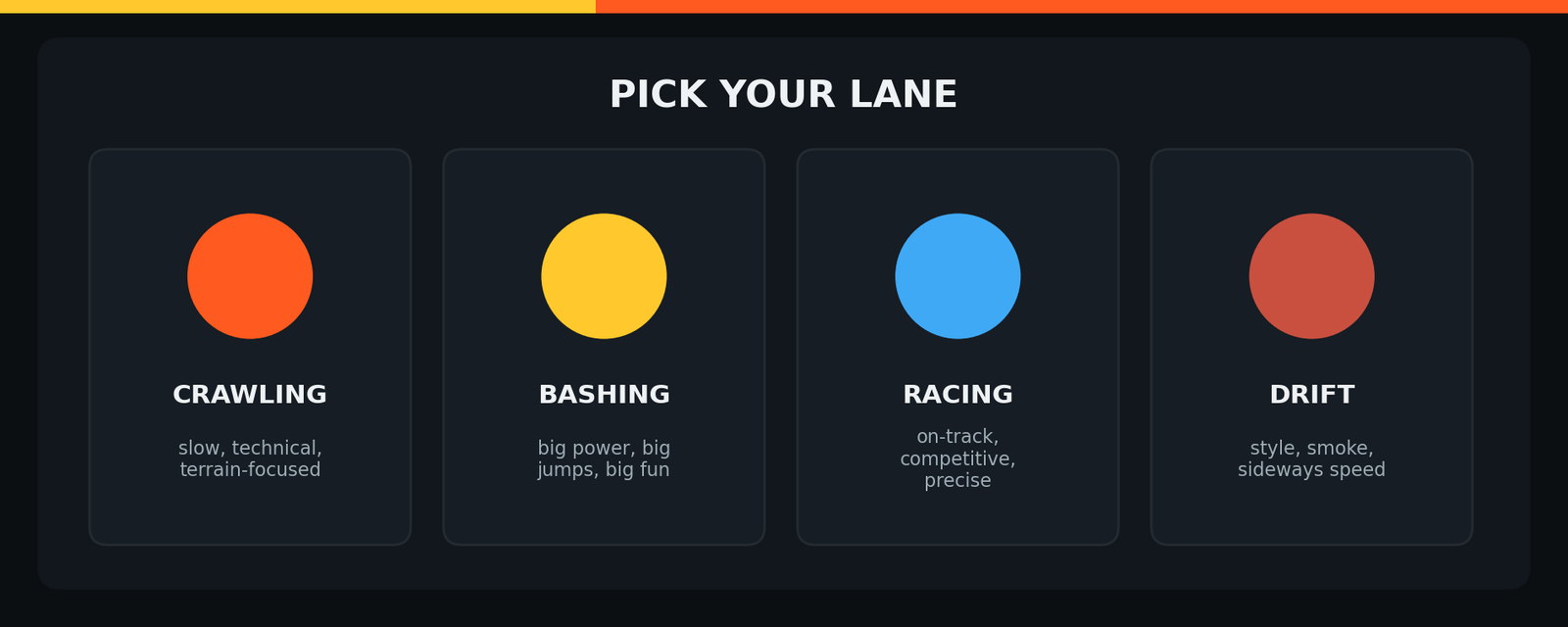
There’s also a quieter difference that took me a while to notice: the successful shops are honest about what they’re not going to stock. They pick a lane, whether that’s crawlers, on-road racing, bashing, whatever their local scene actually supports, and they go deep there instead of trying to be a little bit of everything for everyone. The failing shops tend to spread themselves across every category because they’re afraid of turning a customer away, and end up with a shelf that’s a mile wide and an inch deep, which impresses no one and satisfies no one either. If you want a sense of what’s actually worth stocking heading into a new season rather than carrying everything by default, I go through it category by category in What’s Actually Worth Stocking This Fall.
What if my local scene doesn’t clearly favor one category?
Then look at what you personally know best and can speak to with real authority, since that expertise is itself a form of curation. Customers can tell the difference between a shop that stocks something because a rep pushed it and a shop that stocks something because the owner actually understands and believes in it.
How Do You Know If Your Shop Is Actually Healthy?
I put together a simple self-check for this, because “is my shop healthy” is usually answered with a gut feeling instead of anything concrete. The twelve-point version below is built from the patterns I’ve seen repeat across shops that lasted and shops that didn’t.
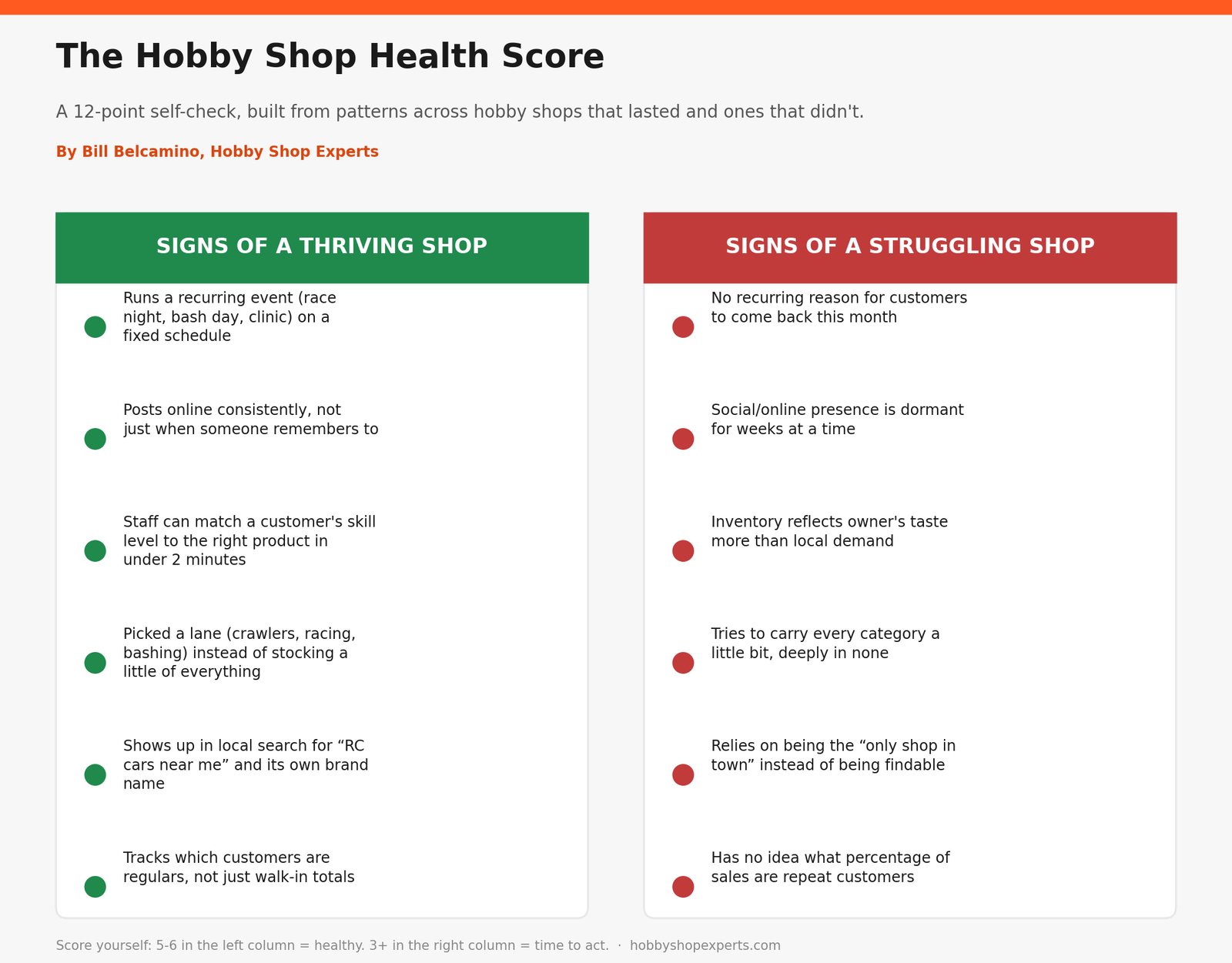
If you scored yourself and landed mostly in the right-hand column, that’s not a reason to panic, it’s a reason to get specific about which one or two things to fix first. That’s exactly what a free store audit and strategy call is for: a real, no-pressure look at where your shop actually stands against this kind of framework.
What Does “Treating It Like a Business” Actually Look Like Day to Day?
This is the part that trips people up, because it sounds like advice you’d give any retail business, and it is, mostly. It means knowing your numbers well enough to notice a slow month before it becomes a slow quarter. It means having a real answer for “why should someone drive past a big-box store to come here” instead of assuming the answer is obvious. And it means treating your online presence, your events calendar, and your customer follow-up as part of running the shop, not as optional extras you get to if there’s time left over after unboxing inventory.
None of that requires abandoning the passion that got you into this. If anything, the owners who last longest are the ones who found a way to fold their genuine love of the hobby into the operational side, using their own excitement about a new release as content for a post, using their own troubleshooting knowledge as the basis for a build clinic, instead of treating the business side as a separate, joyless chore bolted onto the fun part.
Is it too late to fix a shop that’s already struggling?
Rarely, in my experience, as long as there’s still a customer base and a location worth working with. Most struggling shops I’ve looked at aren’t failing because the underlying business is unsalvageable, they’re failing because nobody’s addressed the visibility and community-building gaps yet. Once those get addressed, a lot of shops that felt like they were circling the drain stabilize faster than the owner expected.
Watch: What a Well-Run Hobby Shop Floor Looks Like
Sometimes it helps to just see what a healthy shop looks like in practice, floor layout, product mix, and all. This walkthrough is a good example of a shop that clearly understands the “hub, not warehouse” idea:
Frequently Asked Questions
What’s the single biggest predictor of whether a hobby shop survives?
In my experience, it’s whether the owner treats marketing and community-building as core operations rather than an afterthought. Inventory and location matter, but I’ve seen shops with average inventory in mediocre locations outlast better-stocked competitors simply because customers knew they existed and felt connected to them.
How long does it typically take a new hobby shop to become profitable?
It varies a lot by market and starting capital, but the shops that struggle most are usually the ones expecting profitability within the first year based on inventory sales alone, without building the recurring-visit habits (events, community, repeat accessory sales) that make a shop sustainable long-term.
Do I need a huge marketing budget to compete with bigger stores?
No, and this is genuinely good news for small shop owners. Local visibility and community presence cost far more time than money. A shop that shows up correctly in local search and runs consistent, well-attended events can outcompete a much bigger budget that’s spent without that local focus.
Should I focus more on my physical shop or my online presence?
They’re not actually separate anymore. Most customers research online before ever walking in, even for a purchase they intend to make in person. Your online presence is effectively your shop’s front window now, and treating it as an afterthought means a lot of nearby customers never make it to your actual front door.
None of this is complicated, and none of it requires a marketing degree. For more general small business grounding beyond RC specifically, SCORE’s free retail business resources and the SBA’s business guide are both worth a look. But at the core, it requires treating the shop like a business that happens to serve a hobby, instead of a hobby that happens to generate some revenue. I know that’s a hard needle to thread when the whole reason you got into this was passion, not spreadsheets. But the shops still standing after five years are almost always the ones that figured out how to hold both at once.