

Table of Contents
- Brushed or Brushless for a First RC Car?
- Will a beginner “ruin” a brushless motor by driving badly?
- NiMH or LiPo?
- How do I know if a LiPo battery has gone bad or is unsafe?
- How Much Should I Actually Expect to Spend to Get Started?
- What’s the one accessory beginners most often skip and regret?
- Is 4WD or 2WD Better?
- What’s the Actual Difference Between a “Toy Grade” and “Hobby Grade” RC Car?
- What Tools Does a Beginner Actually Need on Day One?
- Do I need to learn to solder right away?
- How Do I Maintain an RC Car Between Runs?
- How often should I actually service a hobby-grade truck?
- Watch: Brushed vs. Brushless, Explained Simply
- Quick-Answer FAQ
- Do I need a special license or registration to drive an RC car?
- How long does a typical RC battery last per charge?
- Can I upgrade a brushed truck to brushless later?
- What’s the most beginner-friendly scale size to start with?
- How do I find answers to more specific questions about my local shop’s inventory?
Between running Hobby Shop Experts and just being a guy who hangs around tracks and parking lot bash sessions, I get asked a lot of the same questions, over and over, from people at very different points in the hobby. So instead of answering them one at a time forever, here’s a running list. I’ll add to this as new ones come up.

Brushed or Brushless for a First RC Car?
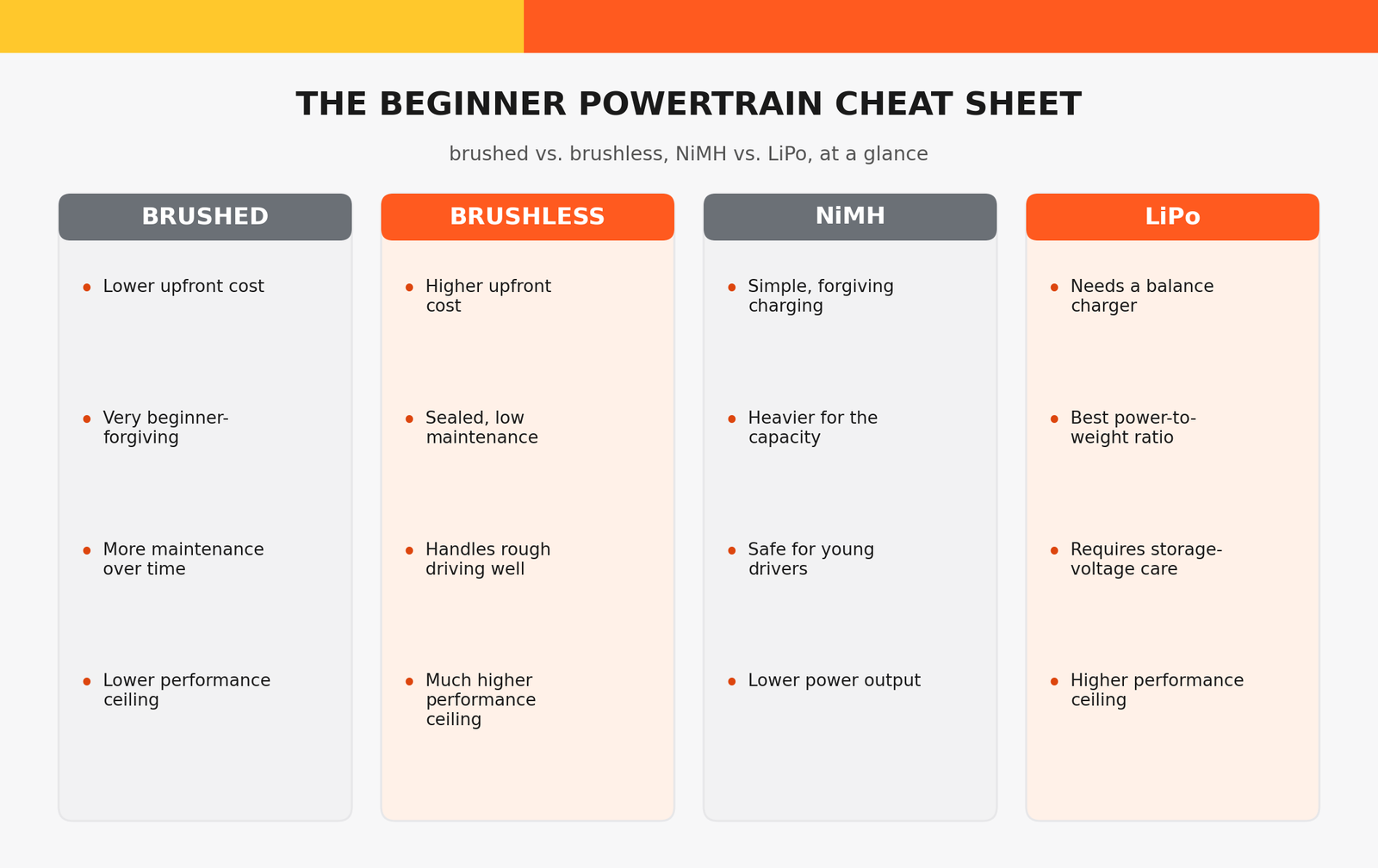
If someone is buying their very first truck and budget is tight, there’s still nothing wrong with brushed. It’s simpler, it’s cheaper to replace if something goes wrong while they’re learning, and it won’t punish a beginner’s mistakes as hard. That said, brushless has gotten cheap enough that if the budget allows it, I generally point people there now, because it needs less maintenance and the performance ceiling is so much higher that they won’t outgrow the motor in a month. I go into exactly why brushless has moved so far down the price ladder in Brushless Under $300, Belted Tires as Standard, if you want the bigger-picture trend behind this answer.
Will a beginner “ruin” a brushless motor by driving badly?
Not really, in the way people worry about. Brushless motors are sealed and have no brushes to wear out from rough driving, so the motor itself is fairly forgiving. What tends to get damaged from beginner mistakes is the drivetrain and body from crashes, not the motor from misuse, which is actually one more point in brushless’s favor for newer drivers.
NiMH or LiPo?
NiMH is more forgiving. You can charge it in a fairly dumb way and it won’t punish you much for it, which makes it a reasonable choice for younger drivers or anyone who isn’t ready to think about charge rates and storage voltage. LiPo gives you more power and better weight for the capacity, but it demands respect: a proper balance charger, correct storage voltage if you’re not running it again soon, and a fireproof bag or container. If someone isn’t willing to learn those habits, I steer them toward NiMH until they are. For the actual chemistry behind why LiPo needs this extra care, Battery University’s guide to charging lithium-ion cells is the clearest technical explanation I’ve found, and it’s worth reading once even if you never touch the math again.
How do I know if a LiPo battery has gone bad or is unsafe?
Puffing (visible swelling), a case that feels unusually warm at rest, or a cell voltage that won’t hold a balanced charge are all signs to stop using it immediately. Store and dispose of a suspect pack in a fireproof container, and never charge a puffed battery unattended. This is one of the few areas in the hobby where being overly cautious costs you nothing and being careless can cost you a lot.
How Much Should I Actually Expect to Spend to Get Started?
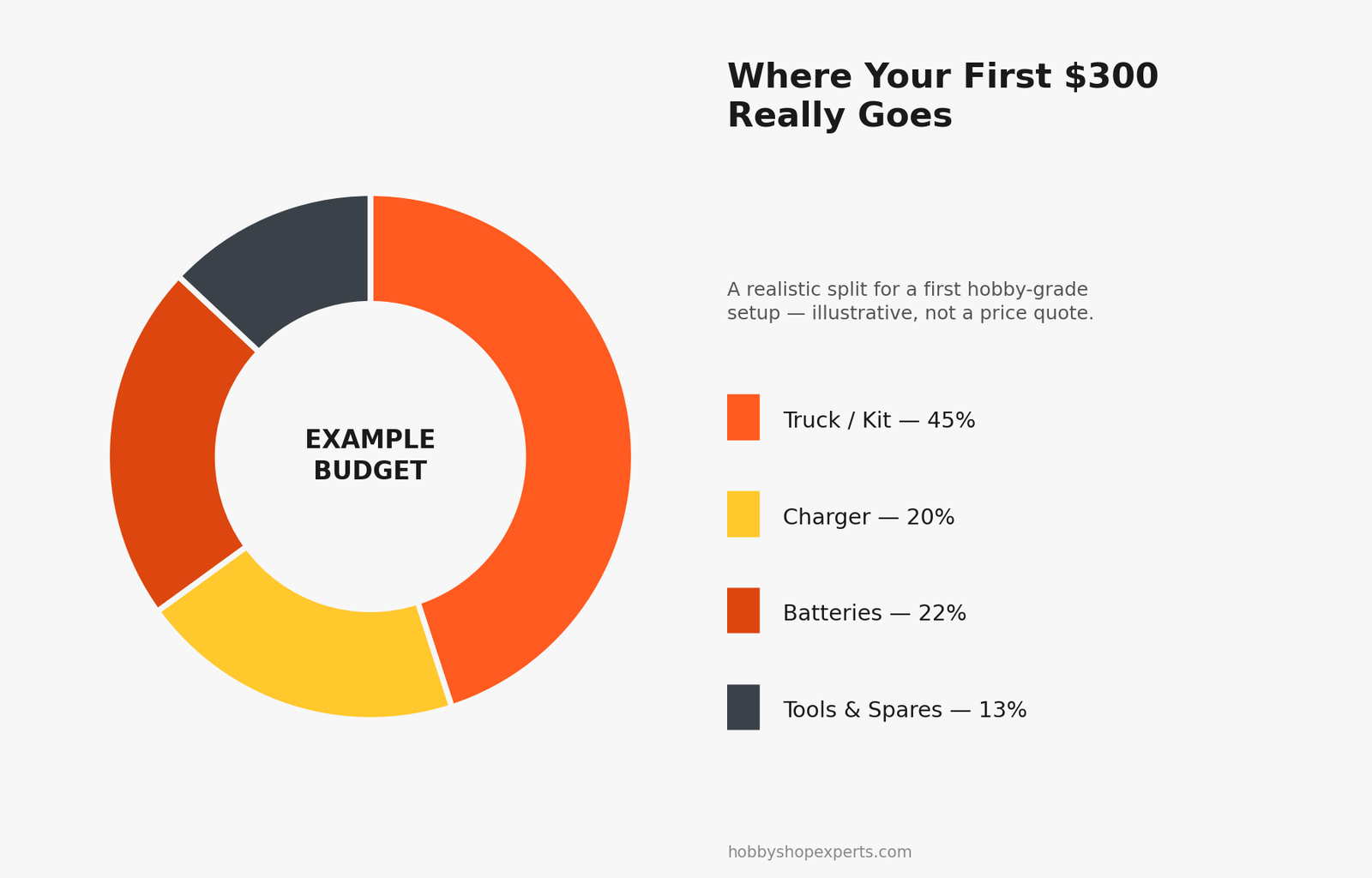
People are usually surprised that the truck itself is the smaller half of the real cost. Between a decent charger, batteries, basic tools, and spare parts you’ll inevitably need, plan on the accessories adding up to something close to what the truck cost. Buying a cheap truck and then cheaping out on the charger is the single most common way I see people set themselves up for a bad first experience.
What’s the one accessory beginners most often skip and regret?
A second battery. Running out of charge fifteen minutes into a session because you only bought one pack is an extremely common first-timer mistake, and it turns what should be a fun afternoon into a lot of standing around waiting for a charge cycle to finish.
Is 4WD or 2WD Better?
Depends entirely on what you’re doing with it. 2WD is lighter, often faster in a straight line for the money, and teaches you more about car control since it’s less forgiving. 4WD is more stable, handles rough terrain and loose surfaces better, and is generally the more beginner-friendly choice if the goal is bashing in a yard or a field rather than racing on a groomed track.
What’s the Actual Difference Between a “Toy Grade” and “Hobby Grade” RC Car?
Hobby grade means the parts are individually replaceable and generally standardized enough that aftermarket upgrades exist. Toy grade usually means that when something breaks, the whole unit is functionally disposable. If you think you’re going to stick with this past a season, hobby grade is worth the extra money almost every time. It’s also worth reading up on general industry reviews and comparisons when you’re deciding between specific hobby-grade models; RC Driver’s review archive is a solid, independent place to cross-check anything a shop or a salesperson tells you.
What Tools Does a Beginner Actually Need on Day One?
You don’t need a full workbench to get started, but a few basics save a lot of frustration. A good hex driver set sized for your specific truck’s hardware, a set of body clips and a few spares, a small bottle of thread-locker, and a basic set of pliers and wire cutters will cover most of the maintenance a new hobbyist runs into in the first few months. Skip the temptation to buy a giant all-in-one tool kit right away; most of what’s in those goes unused, and it’s easy to pick up specific tools as you actually need them.
Do I need to learn to solder right away?
Not immediately, but it’s worth learning sooner rather than later if you’re sticking with the hobby. A lot of connector and motor wire repairs come down to a clean solder joint, and it’s a genuinely useful skill that pays for itself the first time you avoid a shop repair fee for something you could have fixed in ten minutes at home.
How Do I Maintain an RC Car Between Runs?
The habit that prevents the most problems is simple: after every session, especially a dusty or wet one, wipe the chassis down and check the wheel nuts, screws, and any obviously loose linkages before you store it. Once every several sessions, pull the gear cover and check for dirt or stripped teeth, and check your shocks for oil seepage. It’s a five-minute habit that catches small problems before they turn into a broken part mid-run at the worst possible moment.
How often should I actually service a hobby-grade truck?
For a truck getting regular weekend use, a fuller inspection, checking bearings, cleaning and re-lubricating drivetrain components, and inspecting the diffs, every month or two is a reasonable baseline. Trucks used harder or more frequently, especially in dusty or wet conditions, benefit from more frequent attention.
Watch: Brushed vs. Brushless, Explained Simply
If you’re still not sure which motor type makes sense for your situation, this is a clear, current explanation of the practical differences between brushed and brushless setups:
Quick-Answer FAQ
Do I need a special license or registration to drive an RC car?
No, RC cars don’t require any license or registration in the way drones sometimes do. Just be mindful of local park or property rules about where RC vehicles are allowed to run.
How long does a typical RC battery last per charge?
It varies widely by battery capacity, motor size, and driving style, but a common range for a hobby-grade truck is somewhere between ten and twenty minutes of continuous hard driving. This is exactly why a second battery is such a common early upgrade.
Can I upgrade a brushed truck to brushless later?
Often yes, if the platform has an aftermarket conversion kit available, though the electronic speed control and battery connectors usually need upgrading too. It’s rarely as simple as swapping just the motor, so factor that into the real cost before assuming an upgrade path will be cheap.
What’s the most beginner-friendly scale size to start with?
1/10 scale is the most common starting point because it has the widest selection of beginner-friendly, hobby-grade trucks and the most available parts and support. Smaller 1/18 scale trucks are a great option too if space or budget is tighter.
How do I find answers to more specific questions about my local shop’s inventory?
Honestly, just ask. A good hobby shop’s staff should be comfortable walking through any of these questions in person, and if you’re a shop owner reading this wondering whether your own team handles these consistently, that’s worth checking directly, or working through with us via a free store audit.
Send me your questions if you’ve got ones I haven’t covered. I’ll keep building this out. And if you’re newer to the hobby and enjoyed this format, I’ve also written a bit about why this stuff never really gets old in Why I Still Get Butterflies Charging My First Battery Pack of the Season, and shop owners might find What Separates the Hobby Shops That Thrive From the Ones That Fold useful for thinking about how questions like these get handled at the counter.